
Ottoman Population Registers and Identity Papers: Translation and Transliteration
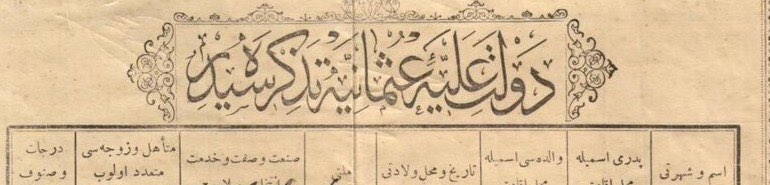
Ottoman population records fall into two broad groups. Nüfus defterleri (population registers) are bound registers compiled by the state, listing inhabitants by district, village, or town quarter. The nüfus tezkiresi (population or identity certificate) is a single sheet issued to an individual, based on the entry in those registers.
The first general population count of the modern period was carried out in 1831, under Sultan Mahmud II. It recorded men only, because its purpose was military recruitment and taxation. Registers were usually kept separately for Muslim and non-Muslim communities. Later counts, especially the census begun in 1881, recorded women as well and formed the basis of the civil registration system that issued identity certificates.
Langora reads, transliterates, and translates these registers and certificates when you send us an image of the page or document.
What the document contains
The content depends on the date and type of record. Common entries are:
| Ottoman script | Transliteration | English meaning |
|---|---|---|
| نفوس دفتری | nüfus defteri | population register |
| تذكره | tezkire | certificate |
| خانه | hane | household |
| سن | sinn | age |
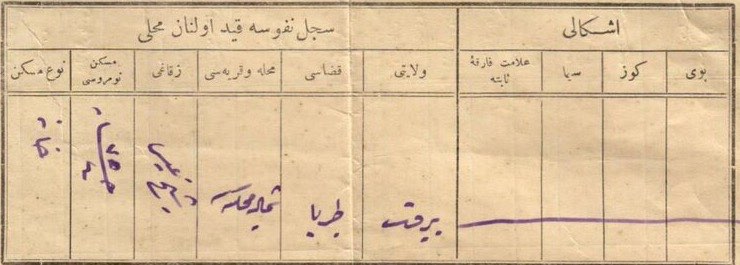
| اشكال | eşkal | physical description (height, beard, eye color) |
| صنعت | san'at | occupation |
| تولد | tevellüd | birth, date of birth |
| وفات | vefat | death |
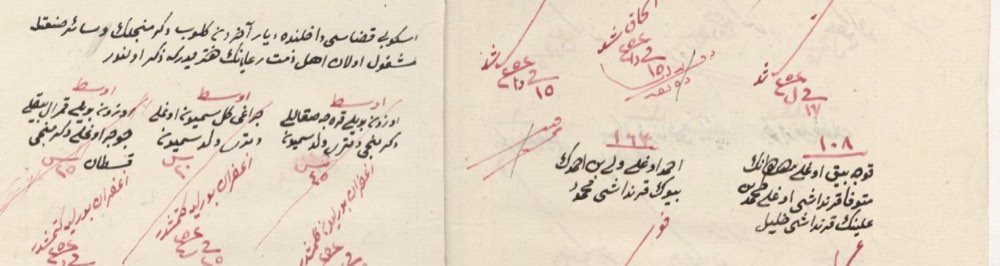
Early registers from the 1830s typically list each household with the name of each male member, his relationship to the household head, his age, and a short physical description, such as height and the color of the beard. Margins often carry later notes about deaths, births, or moves. Identity certificates from the late nineteenth and early twentieth centuries usually give the person's name, the names of the father and mother, place and year of birth, religion, marital status, and the register entry that the certificate refers to.
Why it is hard to read
- Script. Register entries are usually written in a quick Riq'a hand, the common cursive of nineteenth-century offices. Names are written without short vowels, so the same spelling can stand for more than one name.
- Abbreviations and layout. Columns, small marginal notes, and crossed-out entries record changes over many years. Reading the order of the notes correctly matters.
- Dates. Ages are given in years, and dates follow the Hijri (Islamic lunar) or the Rumi (also called Mali, or fiscal) calendar. A birth year in a certificate may need conversion from either.
- Names and places. Personal and place names appear in their Ottoman spelling. Christian, Jewish, and other non-Muslim names are written in Arabic script, which can obscure the familiar form of the name.
What you receive
- A transliteration of the relevant entries or of the whole certificate
- A translation into English or the language you request
- Explanatory notes on names, terms, abbreviations, and place names, with possible alternative readings where the script allows more than one
- Conversion of dates and ages to the Gregorian calendar
- Delivery as DOCX or PDF; TEI-XML on request
Each translation is checked by a second specialist before delivery, following an internal process based on ISO 17100 standards and principles.
Please note: Langora does not provide sworn or certified translations. If you need a translation of an identity record for a citizenship, residence, or court application, a sworn translator recognized by the authority concerned is the right choice.
What Langora does not do
Langora reads and translates the document you already hold. We do not search archives for ancestors, trace family lines, or build family trees. If you have a register page or a certificate in hand, we can help you understand exactly what it says.
How pricing works
- Printed and clearly legible texts: translation starts from €0.18 per source word, transliteration from €0.12 per source word.
- Handwritten registers and certificates are quoted after we see a sample, as a fixed total.
- A fixed project coordination fee applies to each order.
The delivery time is stated in the quote, after we have seen the document.
How to send it
Email a clear photograph or scan to [email protected]. For a register page, send the full page, including the column headings and any margins. Tell us which entry interests you and whether you need transliteration, translation, or both.
Frequently asked questions
Can you find my great-grandfather in the Ottoman registers?
No. Langora does not carry out archive searches for individuals or family history research. We translate records that you already have.
My ancestor's name looks different in the translation. Why?
Ottoman script does not mark most vowels, and names were spelled by the clerk. Our notes explain the reading we chose and give alternatives where relevant.
Why does the 1831 register list only men?
That count was made for recruitment and taxation, so it recorded male inhabitants. Women appear in later registers.
Can you translate a nüfus tezkiresi for an official application?
We can translate it for your own understanding. For official use, you will need a sworn translation, which Langora does not provide.
Do you work with registers from outside present-day Turkey?
Yes, if the record is in Ottoman Turkish. Send a sample and we will confirm whether we can read it.
Related pages
Have a project?
Whether it is a single document or a large-scale archival project, we are ready to help.
Request a quote