
Ottoman Court Records: Translation of Şer'iyye Sicilleri
The şer'iyye sicilleri (kadı court registers) are the record books of the Ottoman courts presided over by a kadı (judge). Each court kept registers of the cases it heard, the legal acts it recorded, and the official orders it received. Registers survive from the fifteenth century to the early twentieth century, when the Ottoman sharia courts were abolished.
The kadı court was much more than a place of litigation. It registered sales, loans, inheritances, marriages, and guardianships, and it served as the local office through which imperial orders reached a town. For this reason, the court registers are a central source for the social, economic, and legal history of Ottoman towns and their hinterland.
Langora reads, transliterates, and translates court register entries for researchers, research projects, and institutions.
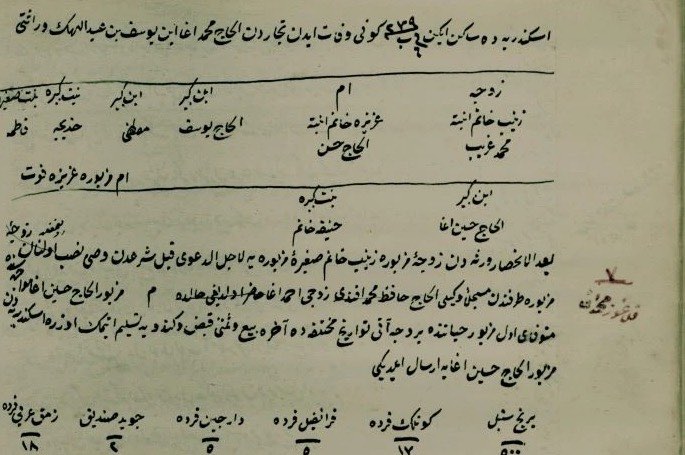
What the document contains
A register is a sequence of short entries, each recording one act or case. The most common types are:
| Ottoman script | Transliteration | English meaning |
|---|---|---|
| حجت | hüccet | court deed recording a legal act, such as a sale |
| اعلام | ilam | written judgment of the court |
| تركه | tereke | estate of a deceased person |
| قسام | kassam | court officer who divided estates |
| نكاح | nikah | marriage contract |
| وصی | vasi | guardian |
| فرمان | ferman | imperial order |
| بیورلدی | buyuruldu | order of a provincial governor |
| نرخ | narh | officially fixed price |
Estate inventories list the property of a deceased person, often item by item with values, and then show how it was divided among the heirs. Case entries name the parties, summarize their claims, record witnesses, and state the outcome. Most entries end with a list of witnesses and a date.
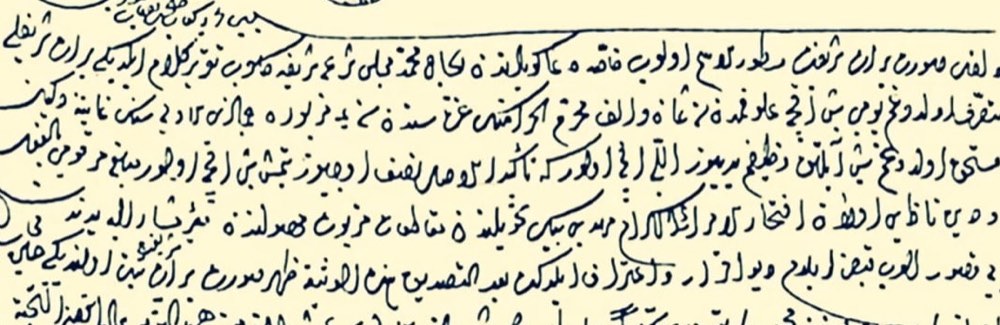
Why it is hard to read
- Script. Court clerks wrote quickly, in compressed cursive hands related to Divani. Later registers often use Riq'a. Letters are joined and dots are frequently omitted.
- Language. Entries are written in Ottoman Turkish with a heavy use of Arabic legal formulas. In some periods and provinces, whole entries are in Arabic.
- Formulas. Each type of entry follows set phrases. Recognizing them helps reading, but translating them literally makes the text hard to follow, so notes are needed.
- Dates. Entries are dated in the Hijri (Islamic lunar) calendar, often by day, month, and year in abbreviated form.
- Numbers. Estate values and debts can be written in Siyakat, the accounting script of Ottoman financial administration.
What you receive
- A transliteration of the selected entries or of a whole register
- A translation into English or the language you request
- Explanatory notes on legal terms, formulas, offices, coins, and units
- Conversion of all dates to the Gregorian calendar
- Delivery as DOCX or PDF; TEI-XML on request, for example for a digital edition of a register
Each translation is checked by a second specialist before delivery, following an internal process based on ISO 17100 standards and principles.
Please note: Langora does not provide sworn or certified translations, and we do not search court registers for family history purposes. We translate the entries you send or that your project has selected.
How pricing works
- Printed and clearly legible texts: translation starts from €0.18 per source word, transliteration from €0.12 per source word. Published transcriptions of court registers fall into this category.
- Handwritten register pages are quoted after we see a sample, as a fixed total.
- A fixed project coordination fee applies to each order.
- Help with identifying and requesting registers from an archive or library is charged at an hourly rate, where the holding institution's rules allow such requests.
The delivery time is stated in the quote, after we have seen the material.
How to send it
Email images of the pages, marked with the entries you need, to [email protected]. For a larger project, a few sample pages and the total number of pages or entries are enough for a quote.
Frequently asked questions
Can you translate only selected entries from a register?
Yes. Mark the entries on the images or give their numbers, and we will quote for those only.
Some entries are in Arabic. Can you translate them?
Yes. Arabic legal formulas and Arabic entries in Ottoman court registers are part of the work.
Can you produce a summary instead of a full translation?
Yes. For large registers, an entry-by-entry English summary with transliterated names and dates is often useful. The scope is agreed in the quote.
Where are the original registers kept?
Registers are held by archives and libraries in Turkey and in many former Ottoman lands. Access rules differ from one institution to another.
Do you transliterate published register editions?
Yes. Printed editions in Ottoman script count as printed text for pricing.
Related pages
Have a project?
Whether it is a single document or a large-scale archival project, we are ready to help.
Request a quote